Curriculum
At Haylands Primary School we follow an flexible teaching model, where we adapt the learning in each lesson to meet the needs of all children. We fully comply with our equalities, as outlined in the Equality Act 2010 and the Special Educational Needs and Disabilities Regulations 2014 by making the curriculum accessible for all pupils, including those with special educational needs and disabilities.
We follow the National Curriculum and the EYFS Statutory Framework, you can find out more about these curriculums on the links below.
https://www.gov.uk/government/publications/national-curriculum-in-england-primary-curriculum
https://www.gov.uk/government/publications/early-years-foundation-stage-framework--2

Haylands Curriculum Statement
At Haylands Primary School, children are at the heart of everything we do. Our curriculum is ambitious, exciting and inclusive, designed to enable every child to reach their full potential, regardless of their starting point or background. We want our children to develop a love of learning, a desire to succeed, the determination to overcome barriers and the confidence to excel.
Our school values of Respect, Excellence, Aspiration, Determination and You Matter are at the heart of our curriculum. They shape the learning behaviours, attitudes and character we want our children to develop, helping them to become confident, resilient and successful lifelong learners.
We believe that children need a strong foundation of knowledge, skills, vocabulary and learning behaviours. Language is therefore a key driver across our curriculum. Through rich opportunities for speaking, listening, reading and writing, we develop children’s communication skills, broaden their vocabulary and enable them to express their ideas with confidence. At Haylands, everyone has something to say.
Our curriculum provides rich, meaningful experiences that build from the concrete towards increasingly complex and abstract thinking. Learning is carefully sequenced so that children can build on what they already know, make connections and secure important knowledge in their long-term memory.
We also want our children to understand their place in the world. Through a broad range of experiences, we encourage them to explore and appreciate their local community, the Isle of Wight and the wider world, while developing their spiritual, moral, social and cultural understanding.
Ultimately, our curriculum aims to give every child the knowledge, skills, confidence, curiosity and character they need to thrive at Haylands and beyond.
EYFS 
Maths 
Phonics and Spelling
Phonics, Early Reading and Spelling Policy
Phonics:
Little Wandle Revised Letter and Sounds
Phase 2 3 and 5 grapheme mat for Year 1 onwards
Little Wandle Revised Letter and Sounds Programme progression Year R and Year 1
Tricky words used on our word mats from Year 1 onwards
Little Wandle Glossary- guide to terminology used in teaching
Reading 
Writing 
Science
Art 
Intent
Why is Art important at Haylands Primary School?
Art has been proven to have remarkable impacts on academic, social, and emotional outcomes, helping us develop empathy and appreciation of different societies, cultures and history. Art provides our learners at Haylands Primary School with the opportunity to express themselves through a variety of media, materials and forms, whilst allowing them to develop their motor skills. Art at Haylands allows our learners to develop their individuality and uniqueness.
Implementation
When is Art taught at Haylands Primary School?
Art is taught as core units throughout the academic year, focusing on three key concepts:
- Chromatic -Chromatic units
- Monochromatic-Monochromatic Units
- Sculpture - Sculpture Units
In order to reduce the cognitive load on our learners, we chunk our Art teaching within our units and teach these lessons each day until the unit is completed, instead of weekly. Art units begin with exploration of small, key steps before progressing to applying these to a final piece.
How is Art taught at Haylands Primary School?
Art is taught through a combination of subject knowledge and skills. Learning takes place both inside and outside the classroom and involves use of a wide range of media and forms, including: clay, papier-mache, chalk, charcoal, paints, pastels, wire and watercolours.
What do we learn in Art at Haylands Primary School?
In art, we learn about the mediums of collage, textiles, photography, drawing, painting, 3D form and sculpture, as well as mixed media. These mediums are revisited throughout a learner’s journey through Haylands, allowing them to refine and enhance their knowledge and skills.
Which artists do we explore at Haylands Primary School?
We explore a diverse range of artists at Haylands Primary School and often revisit artists, including the works of: Tariku Shiferaw, Mr Doodle, Oscar Ukonu, Christa Rijneveld, Dapo Adeola, and Nora Sherwood.
Impact
How do we assess and monitor Art?
At Haylands, we assess art according to the skills taught within the lesson. For example, if the lesson’s intended outcome was to blend primary colours to create secondary colours, then this is what forms the assessment - have they shown this?
Our learners produce their ideas, plans, final products and their experimentation with techniques and skills within their art sketchbooks. Their sketchbooks follow them through their education at Haylands, allowing both themselves and their teachers to review prior learning and make comparisons between their skills development. As art lead, we carry out book-looks, to monitor the progress of art skills and knowledge throughout the school and to monitor SEN provisions.
Furthermore, we both conduct pupil and teacher voices to hear first hand from our learners and educators. The findings from these opportunities then influence our support of our colleagues and our next steps for our subject.
Design Technology
Intent
Why is Design Technology important at Haylands?
At Haylands, we strongly believe that Design Technology helps us to develop reflective learners, who work collaboratively and individually to research, plan, create and evaluate our designs. Through Design Technology, we are able to work collaboratively to solve problems and find solutions, teaching us to deal with uncertainty whilst developing communication, organisational and other practical life skills. In design technology, we learn to appreciate the needs of the product consumer and consider the audience of our products.
Implementation
When is Design Technology taught?
Design Technology is taught both through Skills Development Tasks and through design projects. The Satellite View maps out which thematic units feature this subject and clearly shows the objectives taught. At Haylands, we teach chunk our DT learning within our units, to reduce the cognitive load on our learners.
How is Design Technology taught?
Design Technology is taught as core units throughout the academic year, focusing on three key areas:
-
Food
-
Textiles
-
Construction
Our Design Technology curriculum is intentionally structured to reduce cognitive load and maximise retention of key concepts and skills. By teaching units in daily, focused sessions rather than weekly lessons, we provide learners with continuity and depth of understanding. Each unit is carefully connected to wider curriculum learning, enabling pupils to draw on prior knowledge and make meaningful links across subjects. This coherence supports the development of key vocabulary and conceptual understanding, allowing all pupils to access, apply, and articulate their learning confidently.
What do we learn in Design Technology?
We learn about:-
-
Mechanisms
-
Sliders
-
Levers
-
Structures
-
Textiles
-
Food technology
-
Electronics
Impact
How do we assess and monitor design technology?
At Haylands, learning is sequenced in small, purposeful steps, beginning with focused exploration of core skills, materials, and techniques. Pupils progressively build their knowledge and understanding before applying these to design and create a final product that demonstrates their learning in context. The structure of each unit ensures consistent opportunities for retrieval, reflection, and practical application, supporting pupils in embedding key skills over time. We assess DT throughout our school by setting clear learning intentions, which encompass the skills and knowledge required. For example, if a learning intention was ‘To use a wood saw accurately when designing your model shelter’, the assessment would be as to whether they were able to use the correct equipment, safely and accurately to create their piece. DT progression is monitored through book-looks, pupil conferencing and discussions with class teachers, relating to the learning.
As a result, pupils develop as confident, creative problem-solvers who can apply their technical knowledge and design thinking to real-world contexts. They demonstrate a clear progression of skills and vocabulary across year groups, and their outcomes reflect both innovation and precision. Our approach ensures that all learners, regardless of starting point, achieve success and take pride in their work.
French 
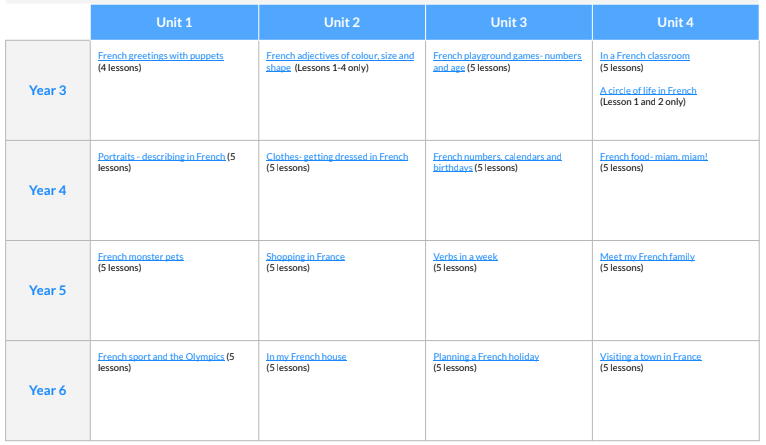
French is taught through the KAPOW curriculum.
French Long Term Overview French Progression of Skills French National Curriculum Coverage
Each year group from Year 3 to Year 6 will cover 4 units each year. In each unit, the children will learn French through the skills of reading, listening, speaking and writing.
Geography 
History 

Physical Education 
National Curriculum for PE in Primary Schools PSHE 
PSHE Policy Statement
At Haylands Primary School, Personal, Social, Health and Economic (PSHE) education is an essential part of the curriculum and contributes significantly to pupils’ personal development, wellbeing, and safeguarding.
Through a structured and progressive PSHE curriculum, pupils develop the knowledge, skills and attitudes required to:
-
Build healthy relationships
-
Understand emotions and mental well-being
-
Keep themselves safe online and offline
-
Develop confidence, resilience and independence
-
Prepare for life in modern Britain
Our PSHE curriculum reflects the school’s commitment to therapeutic learning environments, ensuring that pupils feel safe, valued and supported.
PSHE at Haylands Primary School is delivered through:
-
1Decision (Dimensions Curriculum) – structured PSHE and RSHE learning
-
HappyMind programme – emotional wellbeing and resilience
-
Cross-curricular learning
-
Therapeutic classroom practice
PSHE Definition
Personal, Social, Health and Economic (PSHE) education is a planned programme of learning that helps pupils develop the knowledge, understanding, skills and attributes they need to manage their lives now and in the future.
PSHE education enables pupils to:
-
Build positive relationships
-
Develop emotional literacy
-
Understand mental and physical health
-
Learn about personal safety and safeguarding
-
Develop responsibility and independence
PSHE education plays a significant role in supporting pupils’ personal development and wellbeing, which is a key focus within the Ofsted Education Inspection Framework.
Statutory Requirements
Although PSHE itself is not a statutory subject, key elements within PSHE are statutory.
These include:
Relationships Education
All primary schools must teach Relationships Education. This includes learning about:
-
Families and caring relationships
-
Friendships
-
Respect and kindness
-
Online relationships
-
Staying safe
Health Education
Primary schools must also teach Health Education, which includes:
-
Mental wellbeing
-
Physical health
-
Healthy lifestyles
-
Basic first aid
-
Understanding emotions
Science Curriculum
The National Curriculum for Science includes teaching about:
-
Human development
-
Reproduction in plants and animals
-
Puberty
These statutory requirements follow the Department for Education guidance:
Relationships Education, Relationships and Sex Education (RSE) and Health Education (2019), which remains in force until 31 August 2026.
Parental Right to Withdraw
Parents do not have the right to withdraw their child from Relationships Education or Health Education, as these are statutory requirements.
Parents may request to withdraw their child from non-statutory Sex Education if it is taught beyond the National Curriculum Science content.
Curriculum Intent
At Haylands Primary School, our PSHE curriculum is designed to support pupils’ personal development, mental wellbeing and safeguarding.
We aim to develop pupils who are:
-
Emotionally literate and resilient
-
Confident and independent
-
Respectful and inclusive
-
Able to build healthy relationships
-
Aware of risks and able to keep themselves safe
Our PSHE curriculum ensures pupils gain an understanding of:
-
Healthy relationships
-
Emotional wellbeing
-
Personal safety
-
Online safety
-
Respect, equality and diversity
Through the structured delivery of 1Decision (Dimensions Curriculum) and the HappyMind programme, pupils develop the knowledge, skills and attitudes needed to manage challenges and make informed decisions.
Our intention is that pupils leave Haylands Primary School well-prepared for the next stage of education and life beyond primary school.
Curriculum Implementation
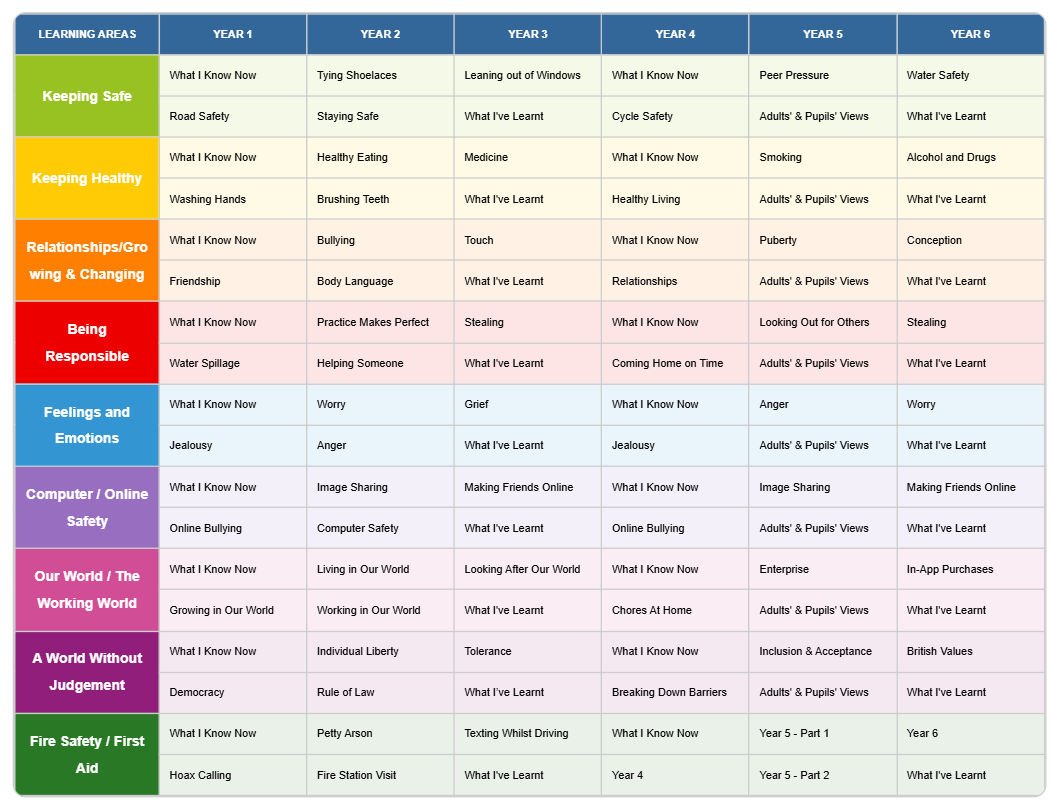
PSHE is delivered through a structured and progressive programme of learning from EYFS to Year 6.
Here is our curriculum overview:
1Decision (Dimensions Curriculum)
The 1Decision programme forms the core of our PSHE curriculum. It provides structured lessons covering:
-
Relationships and friendships
-
Anti-bullying
-
Online safety
-
Personal safety
-
Health and wellbeing
-
Decision-making
-
Growing and changing
Lessons use:
-
Discussion
-
Real-life scenarios
-
Problem-solving activities
-
Reflection and debate
This approach helps pupils apply learning to real-life situations and develop critical thinking skills.
HappyMind Programme
The HappyMind programme supports the mental well-being elements of PSHE by helping pupils to:
-
Recognise and understand emotions
-
Develop resilience
-
Build self-esteem
-
Develop coping strategies
-
Understand positive thinking
HappyMind strengthens pupils’ emotional regulation and mental well-being, which supports learning across the curriculum.
Therapeutic Learning Environments
At Haylands Primary School, we promote therapeutic learning environments to support pupils’ emotional and social development.
This includes:
-
Emotion coaching
-
Calm and reflective spaces
-
Wellbeing check-ins
-
Restorative conversations
-
Trauma-informed practice
These strategies ensure pupils feel safe, supported and ready to learn.
Cross-Curricular Links
PSHE learning is reinforced across the curriculum.
Science
-
Human body
-
Puberty
-
Healthy lifestyles
Computing
-
Online safety
-
Digital citizenship
RE
-
Respect
-
Values
-
Diversity
PE
-
Teamwork
-
Resilience
-
Physical wellbeing
English
-
Discussion
-
Reflection
-
Exploring social and moral dilemmas
Curriculum Progression
The PSHE curriculum builds progressively from EYFS to Year 6 using 1Decision and My Happy Mind.
This progression ensures pupils develop a deeper understanding and stronger personal skills over time.
Our knowledge and skills progression can be found here:
https://www.1decision.co.uk/info/our-programme/knowledge-and-skills-progression.pdf
Curriulcum Impact
The impact of the PSHE curriculum at Haylands Primary School is that pupils develop the knowledge, confidence and life skills needed to thrive socially and emotionally.
Pupils demonstrate:
-
Understanding of healthy relationships
-
Improved emotional literacy
-
Ability to recognise risks and stay safe
-
Confidence in expressing feelings and seeking support
-
Respect for diversity and inclusion
Through pupil voice, behaviour data and wellbeing monitoring, we see pupils becoming more resilient, reflective and responsible learners.
Ultimately, the PSHE curriculum ensures that pupils leave Haylands Primary School well prepared for the social, emotional and academic challenges of secondary education.
RSHE
Policy Statement
At Haylands Primary School, we are committed to providing a high-quality Relationships, Sex and Health Education (RSHE) curriculum within therapeutic learning environments. This ensures all pupils feel safe, valued, and supported, while developing the knowledge, skills, attitudes, and values to:
-
Build healthy, respectful relationships
-
Understand and manage emotions and well-being
-
Keep themselves and others safe online and offline
-
Make informed, responsible decisions
Our RSHE curriculum is statutory, inclusive, age-appropriate, and progressive, in line with:
-
DfE Relationships Education, RSE and Health Education statutory guidance (2019/2020), valid until 31 August 2026
-
National Curriculum Science requirements (human body, puberty)
-
Ofsted framework expectations for personal development, safeguarding, and wellbeing
RSHE is delivered through three complementary strands within therapeutic learning environments:
-
1Decision PSHE – structured teaching on relationships, personal safety, online behaviour, decision-making, and life skills
-
HappyMind – emotional literacy, resilience, coping strategies, and NHS-aligned mental wellbeing
-
Therapeutic Learning Environments – trauma-informed strategies, safe and nurturing classroom climate, reflective practice
Together, these strands ensure pupils develop knowledge, skills, attitudes, confidence, resilience, and wellbeing, preparing them for life in modern Britain.
RSHE Definition
Relationship Education is the statutory teaching of knowledge and skills that enables pupils to:
-
Build healthy, respectful relationships
-
Recognise and manage emotions and feelings
-
Understand personal boundaries and consent
-
Identify safe and unsafe behaviour, including online
-
Develop respect, empathy, and understanding of diversity, equality, and inclusion
This subject is compulsory for all primary pupils, as set out in the DfE Relationships Education, RSE and Health Education statutory guidance.
Parental Rights
-
Parents do not have the right to withdraw their child from Relationship Education or Health Education, because these subjects are statutory requirements and crucial for pupils’ safety, well-being and personal development.
-
Parents only have the right to withdraw their child from non-statutory Sex Education content that goes beyond the statutory requirements of Relationships Education and the National Curriculum Science content. In primary schools, this may be delivered at an age-appropriate point, usually in upper Key Stage 2, depending on pupils’ readiness and school context.
Implementation at Haylands Primary School:
-
Relationship Education is delivered through the 1Decision PSHE scheme, reinforced through HappyMind and cross-curricular learning.
-
Where parents exercise their right to withdraw from non-statutory sex education, the school provides alternative, age-appropriate learning activities.
Curriculum Aims
RSHE within therapeutic learning environments aims to:
-
Support pupils’ personal development, emotional well-being, and mental health
-
Equip pupils with the knowledge to maintain healthy, safe relationships
-
Enable pupils to understand physical and emotional changes during puberty
-
Foster emotional regulation, resilience, and coping strategies
-
Promote respect, equality, diversity, and British Values
-
Ensure pupils are safeguarded and able to seek help
-
Make explicit cross-curricular links
-
Provide a safe, nurturing, trauma-informed learning environment
Curriculum Implementation
RSHE is delivered alongside our PSHE curriculum, using a blended approach:
-
Weekly PSHE lessons, through 1Decision and My Happy Mind.
-
Therapeutic strategies are embedded in all lessons for emotional regulation, reflection, and resilience.
-
Cross-curricular reinforcement:
-
Science: human body, growth, puberty, healthy lifestyle
-
RE: values, beliefs, families, community
-
Computing: online safety, digital responsibility
-
PE: teamwork, physical wellbeing, resilience
-
English: discussion, reflection, scenario analysis
-
-
Assemblies and wellbeing days reinforce key messages.
-
Variation for SEND pupils ensures all children have access to learning.
Key Features of Implementation
-
Progressive and age-appropriate sequencing from EYFS to Year 6
-
Integration of mental health and wellbeing using My Happy Mind in every year group.
-
Therapeutic learning environments are embedded in lessons and across the school
-
Cross-curricular links ensure reinforcement and application of RSHE knowledge
-
Adaptations for SEND pupils ensure all children have access to the curriculum and learning opportunities
Safeguarding and Inclusion
-
RSHE in therapeutic learning environments is central to safeguarding and personal development
-
Promotes equality, diversity, and British Values
-
Lessons are inclusive, with trauma-informed strategies supporting pupils’ emotional and social needs
-
SEND pupils receive differentiated support in safe, nurturing environments
Monitoring and Evaluation
-
Subject leader monitors coverage, progression, and impact via:
-
Lesson observations and learning walks
-
Pupil voice and reflection activities
-
Behaviour and well-being tracking
-
Staff CPD and confidence in delivering programmes
-
-
Regular curriculum reviews ensure statutory compliance, therapeutic effectiveness, and responsiveness to pupil needs
Curriculum Impact
-
Pupils demonstrate knowledge, skills, confidence, resilience, and well-being
-
Pupils apply learning in real-life situations, maintain positive relationships, and make informed choices
-
Pupils feel safe, understood, and supported, benefiting from therapeutic learning environments
-
Prepares pupils for the next stage of education and life in modern Britain
Religious Education 
We follow the 'Living Difference' RE syllabus